Lay-down or seated
Match internal usable space and entry to the intended user experience and session turnover.
Sauna, Cold Plunge & Hot Tub Manufacturer · OEM / ODM
Home / Cold Plunge / Stainless Steel
Stainless steel cold plunge manufacturer · business supply
Compare Bropool stainless steel cold plunges by vessel, exterior, cooling system, entry, service access and installation requirements.
Start with user posture, footprint and equipment layout. Then confirm water-contact material, insulation, entry, drainage, cooling, filtration, ventilation and service access against the current model and quotation.
Product collection
Showing 1–9 of 26 matching cold plunges
What this route means
A stainless appearance can describe the vessel, the exterior or both. The useful buying decision combines construction with the user's body position, entry method, equipment arrangement and available service space.
The broad cold plunge category helps compare all vessel routes. This page stays focused on stainless configurations and the questions a buyer should settle before requesting a quotation.
Match internal usable space and entry to the intended user experience and session turnover.
Review step position, rim height, safe entry and the footprint available around the vessel.
Choose the equipment arrangement only after ventilation, noise, connection and service access are understood.
Compare formats
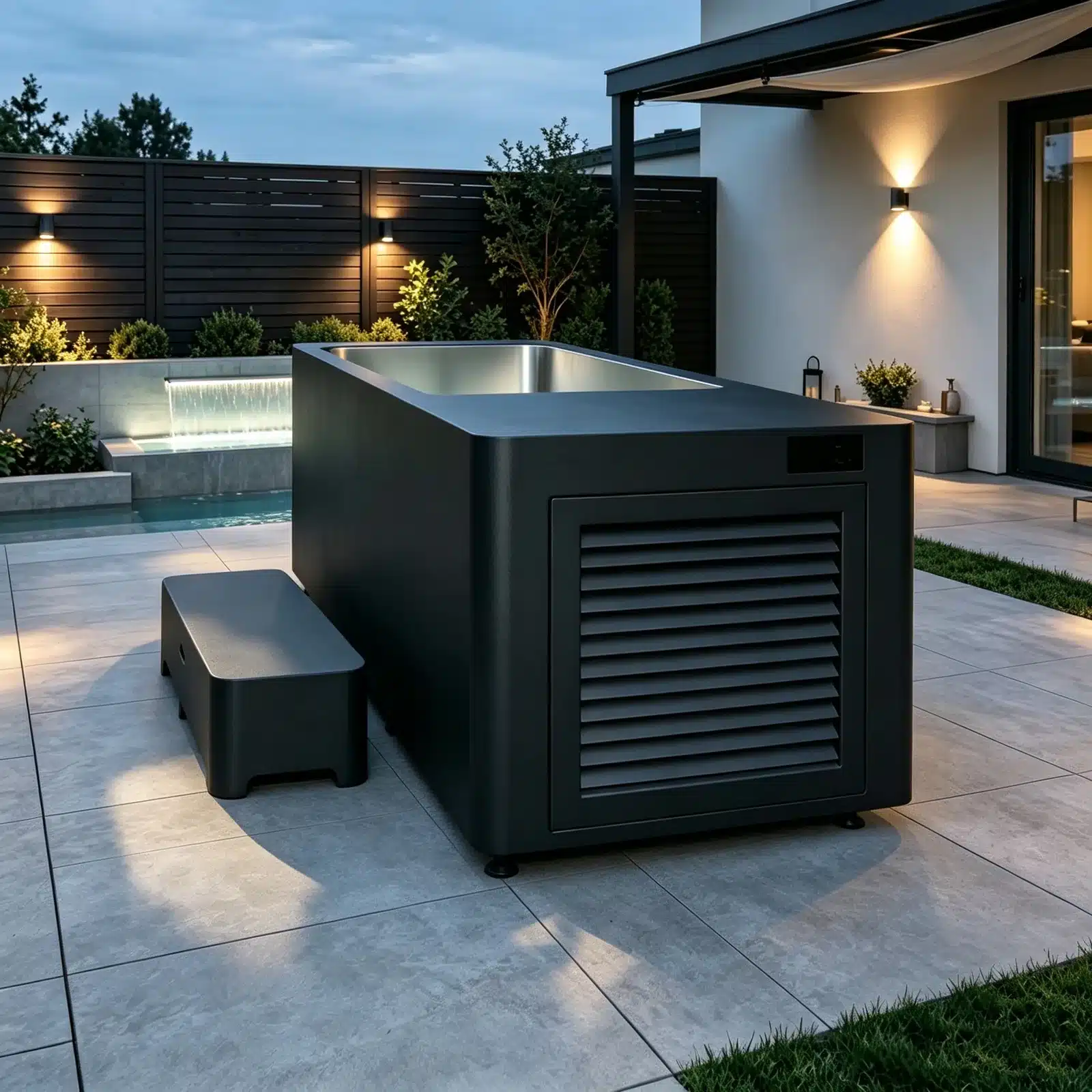
The CT-20 and CT-26 views show two complete stainless-finish forms with different proportions and service layouts. They are useful for early route selection, while the current model record remains the basis for dimensions, capacity, components and performance.
Do not choose from appearance alone. Record how users enter, how many sessions the site expects, where equipment can breathe and how maintenance staff reach the service area.
Vessel and water system
Cooling, circulation, filtration and sanitation are connected decisions. The appropriate arrangement depends on water volume, target operating conditions, ambient environment, frequency of use and the maintenance plan.
| Decision | Buyer input | Quotation confirmation |
|---|---|---|
| Vessel | User posture, entry, usable space and finish direction | Current construction, dimensions, insulation and included fittings |
| Cooling | Ambient conditions, target use and duty pattern | Equipment identity, operating basis and connection scope |
| Water care | Turnover, hygiene plan and operator capability | Circulation, filtration, sanitation options and consumables |
| Service | Ventilation, drainage, clearance and access path | Required openings, maintenance reach and local work |
Material and finish
The water-contact vessel, exterior panels, structural frame, steps, fasteners and fittings may have different material and finish requirements. A useful specification records the intended cleaning method, water-care approach, site exposure and appearance target.
Request the current material schedule for the selected model. If an alloy, coating or texture is commercially important, place it in the quotation and approval record rather than relying on a category description or photograph.
Site and service planning
The vessel footprint is only the start. Check delivery access, floor or base support, wet-area drainage, electrical supply, equipment ventilation, heat rejection, noise, splash control and a clear service path.
Commercial projects should also record turnover, cleaning responsibility, water-change procedure and the person who will manage daily checks. Local trades remain responsible for work that must comply with destination rules.
Confirm doorway, corridor, lift, turning and final-position constraints before dispatch.
State what exists on site and who completes final connections and protection.
Keep filters, controls, drains and equipment panels accessible after installation.
Manufacturing review
A fabrication photograph can show the type of work involved, but the buyer still needs model-specific records. Align the drawing, material schedule, components, finish, insulation, fittings, test points and packaging before production approval.
Define inspection questions that can be checked consistently: overall dimensions, visible finish, connection locations, drain operation, included parts, labels and packing protection. Broader capability questions belong on the factory and quality page.
Build the RFQ
Send confirmed requirements and clearly mark open choices. Bropool can then compare suitable stainless formats and state which details need a drawing, option review or local confirmation.
Buyer questions
Send the vessel, cooling system, site and service requirements in one RFQ.
Confirm the water-contact vessel material separately from exterior panels, frame, trim and fittings. Ask for the current model material schedule and finish rather than assuming one alloy applies to every visible metal surface.
No universal layout should be assumed. Some formats show an integrated equipment enclosure, while other projects may use separate equipment. Confirm the selected model, included components, connections, ventilation and service access.
Outdoor suitability depends on the selected model, weather exposure, drainage, electrical protection, equipment ventilation, operating range and local installation. Give Bropool the site conditions before approval.
Yes. Branding, selected finish directions, labels, manuals, packaging and feasible option changes can be reviewed against a defined base model through the OEM route.
Send destination, buyer type, quantity, user posture, footprint, indoor or outdoor placement, target operating needs, equipment preference, drainage, electrical context, branding and required documents.
Project-specific next step
Use the RFQ form to share your market, users, footprint, duty pattern, equipment preference, site conditions, quantity and required changes. Bropool will respond against the appropriate model route.
Project enquiry
Share the company, destination, product direction and decision you need Bropool to review. The team will use the selected page and your message as the starting context.