Exterior and vessel
- Visible exterior material or cladding
- Finish, colour and surface treatment
- Inner vessel material as documented
- Frame, bands and exposed hardware
- Cover and entry components
Sauna, Cold Plunge & Hot Tub Manufacturer · OEM / ODM
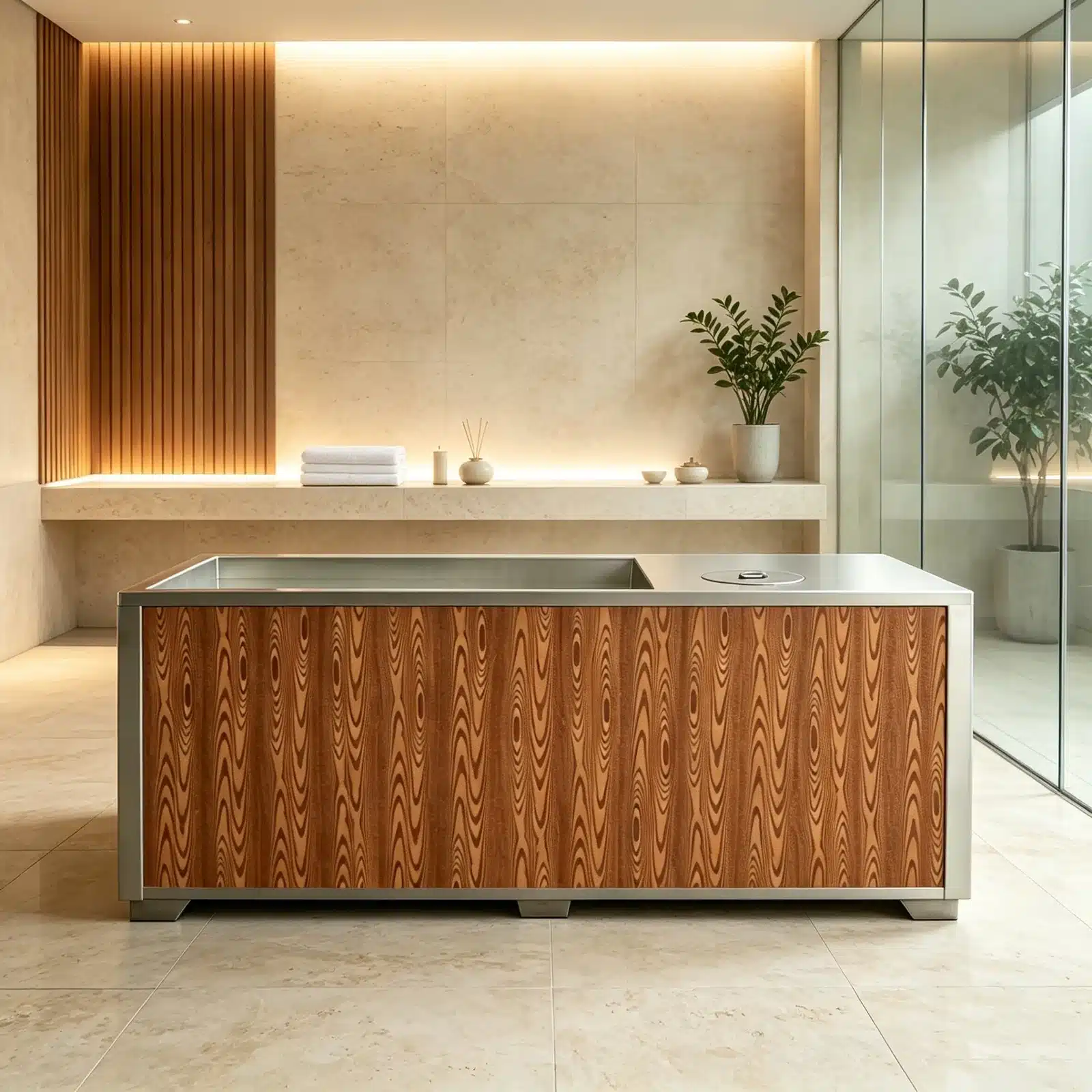
A stainless steel vs wood-clad cold plunge decision begins with the visible exterior route, the desired setting and the buyer's care expectations. An image can show exposed metal or a clad surround, but it cannot establish the hidden vessel, frame, insulation, water system or every supplied component.
Compare like with like: identify the model first, then confirm every material layer and system item that matters to use, cleaning, service and delivery.
Responsible organization: Bropool. Prepared and reviewed by Bropool using named stainless-finish and wood-clad cold-plunge references plus buyer care, access and system inputs.
· Contact Bropool for the current record or a project-specific answer.
Exposed stainless steel can create a technical, clean-lined appearance. Wood cladding or a wood-look surround can create a warmer furniture-like expression. Neither appearance alone tells the buyer which inner vessel, supporting frame, cover, equipment layout or water-treatment route is supplied. Those details must come from the current model specification and quotation.
The first decision is therefore visual and operational: where the unit will sit, what the surrounding design requires, who will clean and inspect the exterior, and how service panels will be reached. The second decision is technical: the named model, complete material schedule, water system, utilities and documentation.
Use this stainless steel vs wood-clad cold plunge comparison to separate appearance preferences from model-specific construction and system facts.
| Buyer question | Exposed stainless route | Wood-clad route |
|---|---|---|
| Visual direction | Metal remains a primary visible surface. | A wood or wood-look surround is a primary visual feature. |
| Cleaning brief | Confirm approved cleaner, finish direction and how marks are managed. | Confirm exact cladding, treatment, exposure limits and approved care method. |
| Service access | Locate panels, ventilation openings and removable parts on the quoted model. | Confirm how cladding interfaces with panels, ventilation and replacement access. |
| Site exposure | Review indoor or outdoor placement, splash, weather and surrounding chemicals. | Review the same conditions plus material-specific finish and moisture care. |
| What remains unknown from a photo | Inner vessel, frame, insulation, plumbing, cooling, circulation, filtration, sanitation, controls and included accessories. | |

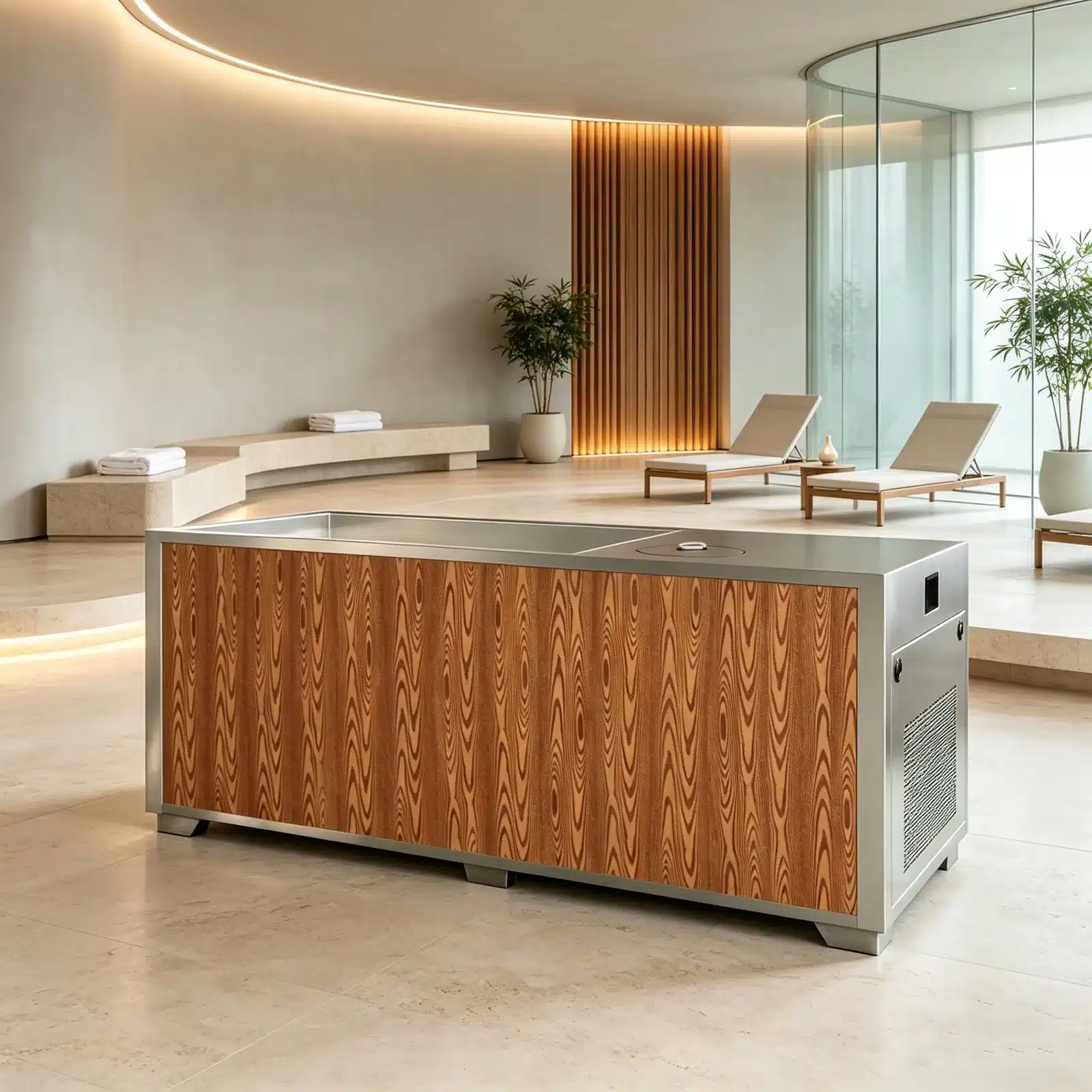
For a stainless steel vs wood-clad cold plunge review, record the exact vessel material, exterior assembly, finish and supplier care instructions.
Ask each proposal to name the model and describe the exterior skin, inner vessel, frame or support structure where documented, cover, access panels and included system components. If a field is unavailable, keep it open. Do not substitute a caption, file name or visual impression for an approved specification.
A stainless steel vs wood-clad cold plunge brief should compare the complete water system and service route, rather than exterior material alone.
A private home, hotel, gym and recovery studio can place different demands on the same visible finish. Define who is responsible for daily presentation, approved cleaning, water care, cover use, routine inspection and escalation. Record whether the unit is exposed to weather, direct sun, splash from nearby equipment or cleaning products used in the surrounding space.
Ask for current care instructions for the selected material and configuration. A generic statement that stainless steel is maintenance-free or that wood cladding is automatically suited to every outdoor environment would be misleading. The answer depends on the exact grade or material, treatment, construction, exposure and supplier instructions.
The stainless steel vs wood-clad cold plunge decision should state the exposure, cleaning plan and approved model before a finish is selected.
The following product images contain no people or old branding. They support comparison of visible form and exterior direction. They do not establish the unseen construction or the final supplied system. Confirm all technical and commercial fields against the selected model.
The preferred exterior is useful only if the unit can be delivered, positioned, connected and serviced. Share the available footprint, route from unloading to final position, door and lift limits, base condition, drainage, electrical supply, ventilation or heat-rejection context and the clearance available around service areas.
Request the current model drawing and packed information when available. Check whether cladding changes the external dimensions or access method. Keep local design, structural, electrical, plumbing and authority review with the responsible professionals. Product information supports that work but does not replace it.
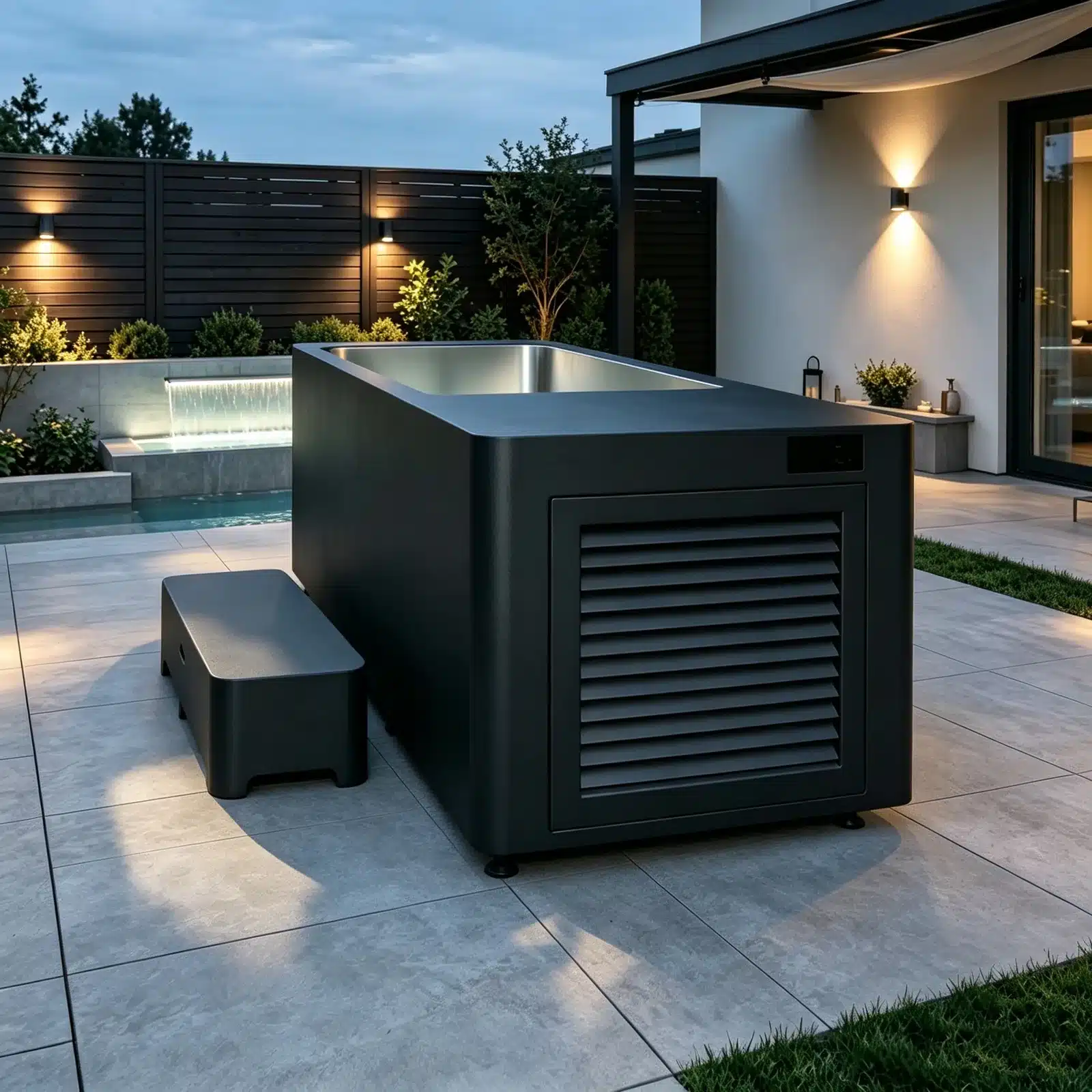
Name the two or more models being compared. For each, request the visible exterior, inner vessel, frame, cover, equipment arrangement, water-system scope, utilities, service clearance, care instructions, destination documents, packaging and available finish choices. Add site photos or plans only when they are safe to share and clearly label any desired change.
Answers remain tied to the selected model, destination, current documents and written commercial scope.
No. Wood-clad describes a visible exterior route. The inner vessel and all hidden construction must be identified in the current model specification.
No universal maintenance-free claim is made. Confirm the exact material and finish, approved cleaners, operating environment, water-care instructions and inspection routine for the selected model.
Outdoor suitability depends on the exact model, materials, treatment, exposure, base, drainage, cover, utilities and maintenance plan. Request written confirmation for the selected configuration.
The answer depends on the design brief, user flow, cleaning team, exposure, service access and approved model. Compare those inputs rather than relying on one visual preference.
No. The images show visible product form and exterior direction. Confirm the vessel, cooling, circulation, filtration, sanitation, controls and included parts in the model record.
Include the named models, exterior and inner materials, finish, cover, system scope, site conditions, service access, care instructions, destination documents, quantity and any requested customization.
A complete stainless steel vs wood-clad cold plunge RFQ links every requested claim to the named model, site conditions and written quotation.
Send the setting, care priorities, preferred appearance, site constraints and named product references so Bropool can identify the fields that still need confirmation.
For a model-specific check, contact Bropool on WhatsApp.
Project enquiry
Share the company, destination, product direction and decision you need Bropool to review. The team will use the selected page and your message as the starting context.