Internal or integrated
Review lost seating space, hot-surface separation, cleaning reach and the position of the flue.
Sauna, Cold Plunge & Hot Tub Manufacturer · OEM / ODM
Home / Hot Tubs / Wood-Fired
Wood fired hot tub manufacturer · business supply
Compare Bropool wood-fired hot tubs by tub shape, vessel, exterior, stove position, flue, user capacity, site clearances and operating requirements.
Model orientation: HT-105 uses an internal stove, while HT-111 uses a built-in vertical wood-burning stove. Other models may use external or integrated layouts. Confirm the actual heater position, guard, flue parts and usable space on the current model drawing.
Choose a layout only after the destination and operator can support safe installation and daily use. Final heating components, guards, dimensions, capacity, included parts and instructions are confirmed for the selected model.
Product collection
Showing 1–9 of 9 matching hot tubs
What this route covers
A wood-heated tub is selected as a complete product, not as a stove added after the vessel choice. The heating unit, water connections, flue, guard, user space and service reach must work together.
The broad hot tub page compares the full category. This page stays focused on the decisions created by wood heating and the information a business buyer needs before quotation.
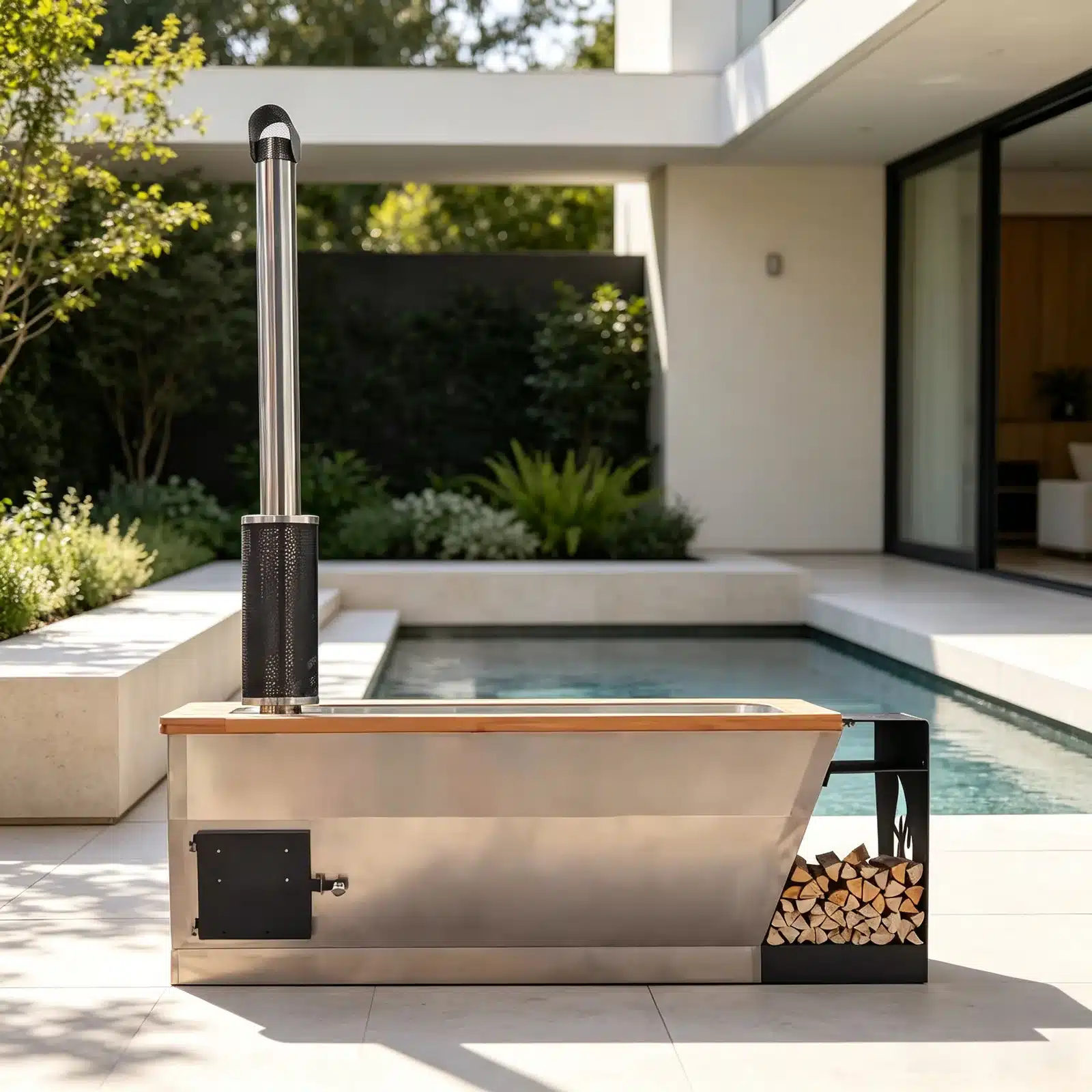
Review lost seating space, hot-surface separation, cleaning reach and the position of the flue.
Review pipe connections, surrounding clearance, guarding, handling and access to the unit.
Define fuel, firing, supervision, water care, ash handling and shutdown responsibilities.

Compare complete layouts
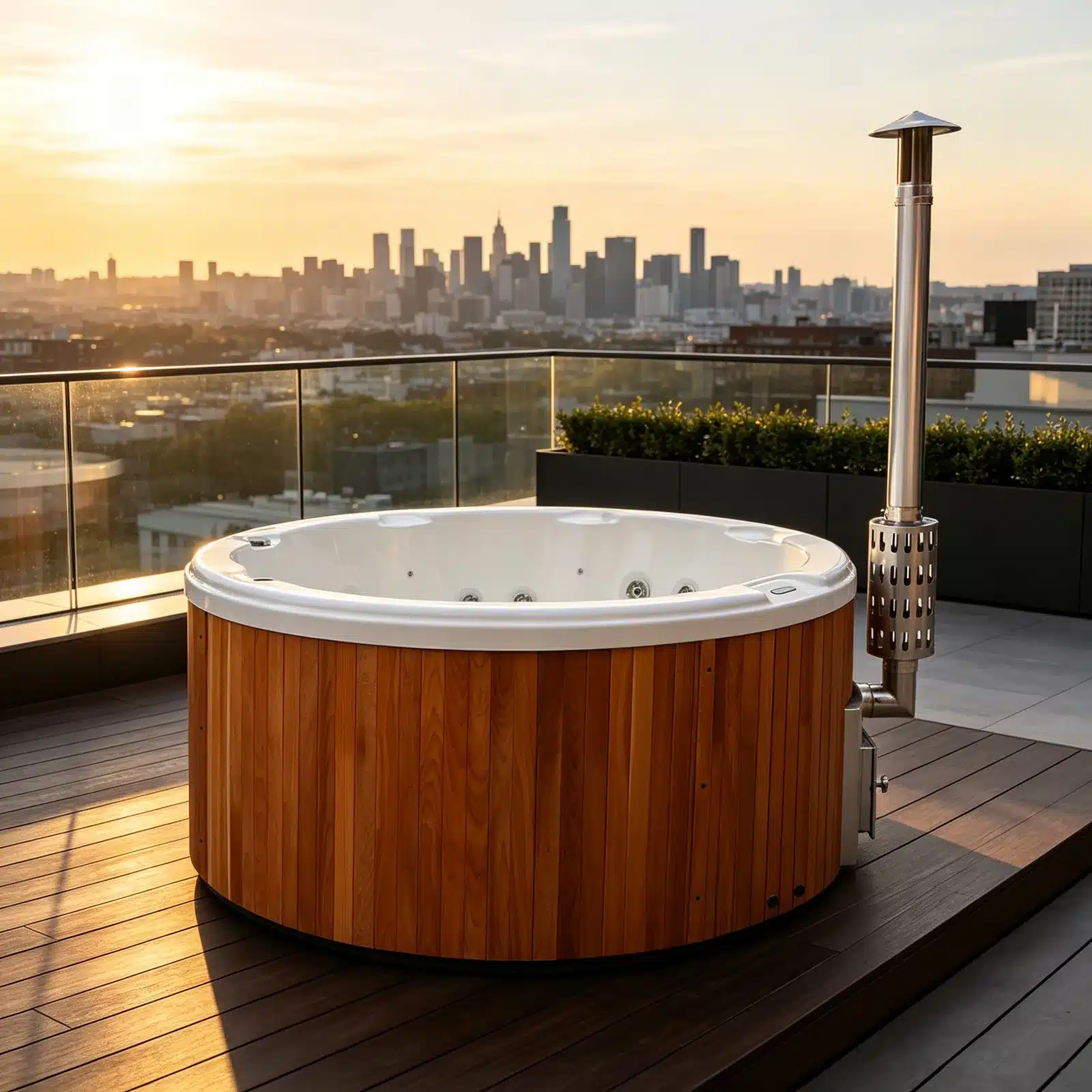
The HT-110 and HT-106 views show round and rectangular routes with visible external or integrated system relationships. Use the images to discuss envelope and access, then request the current drawing and supplied-component list.
Compare internal seating, external footprint, entry, cover movement, stove access, connection locations and the space required around hot surfaces. Final model details belong in the quotation.

Stove and flue decisions
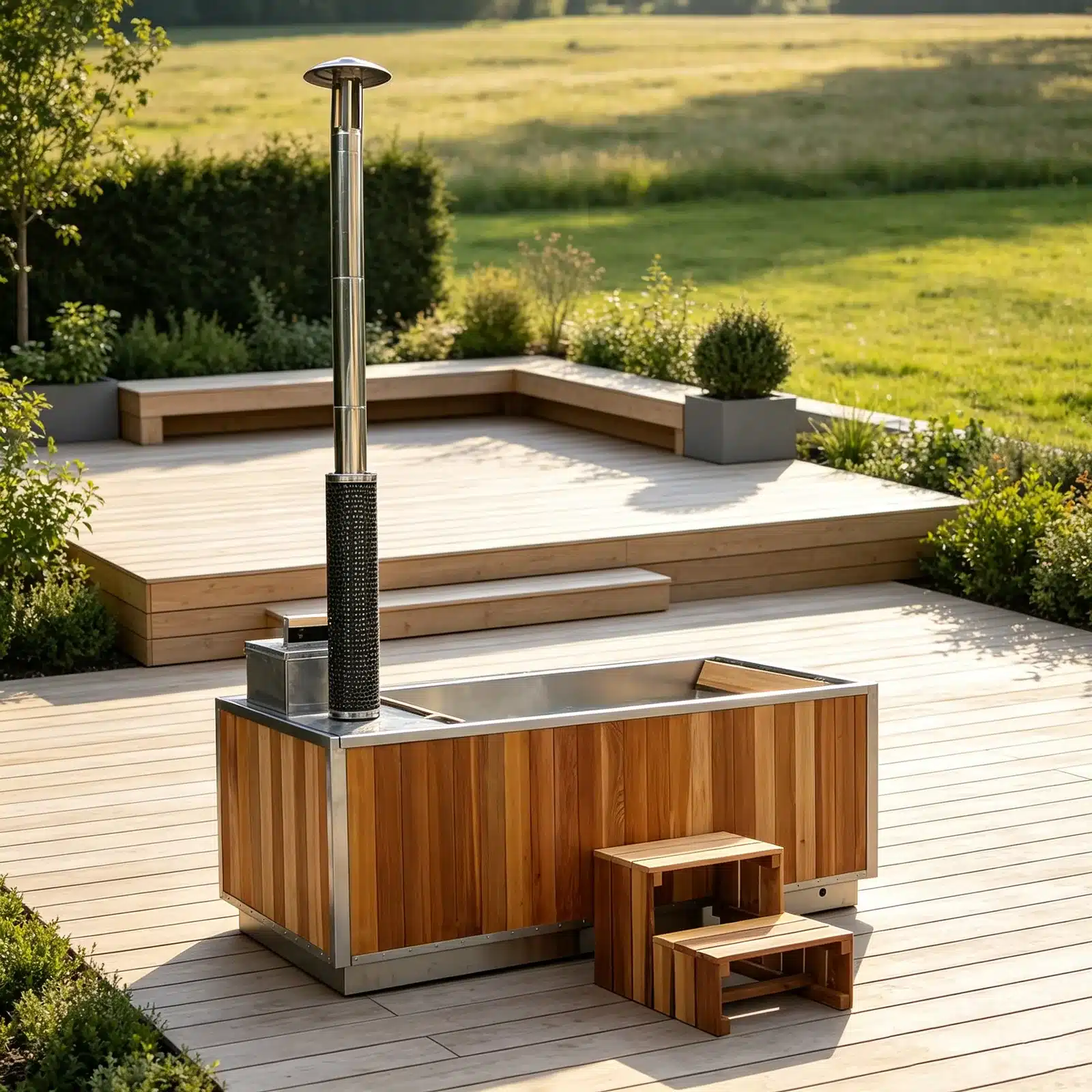
The buyer should know where the stove sits, how water moves between vessel and heater, where fuel is loaded, how hot surfaces are separated, how the flue is routed and how the unit is drained or serviced.
| Item | Question before selection | Project record |
|---|---|---|
| Stove position | Internal, integrated or external for this model? | Current drawing and safe access plan |
| Flue | Where can it rise without conflicting with users or surroundings? | Component list, route and local installation review |
| Guarding | Which hot surfaces require separation? | Included guards and local clearances |
| Fuel and ash | Who stores fuel, fires the unit and removes residue? | Written operating and housekeeping responsibility |
Site and local responsibility
Record the base, surrounding materials, user circulation, water drainage, prevailing conditions, overhead space, nearby openings, fuel storage and emergency access. The buyer must involve qualified local professionals where installation rules or trade work apply.
Bropool can identify the current model configuration and agreed components. The destination team remains responsible for confirming permitted use, siting, clearances, final connections and operating practice under local requirements.
Water, fuel and daily operation
Warm-up depends on the model, water volume, starting temperature, ambient conditions, fuel and operator practice. The site needs a repeatable method for filling, firing, monitoring, user supervision, water care, cleaning and draining.
Ask for the current instructions that accompany the selected configuration. Train the operator on the actual supplied product and record who performs routine checks. Do not base a commercial promise on an uncontrolled demonstration time.
Check water level, connections, flue, surrounding area, fuel and visible product condition.
Follow the supplied instructions, control access and monitor users and equipment.
Complete shutdown, ash handling, water care and any required inspection or service note.
Model and manufacturing approval
The approved specification should identify the model, overall dimensions, water-contact construction, exterior, seating, stove, flue parts, guards, connections, drain, cover, steps, labels, accessories and packaging.
If the buyer requests a material, component or layout change, record its effect on user space, assembly, site work and documents. Inspection points should cover dimensions, visible finish, component identity, included parts and pack condition.
Choose the base model and heater position.
Check users, site, flue, fuel and local duties.
Record vessel, exterior, components and accessories.
Align drawing, option list, documents and quotation.
Carry the approved version into packing and operation.
Prepare the RFQ
A model recommendation is stronger when Bropool understands the setting and who will install and operate the equipment. Mark unknown choices for review.
Buyer questions
Send the tub, stove, site and operating requirements in one RFQ.
An internal heating zone uses space within or directly integrated with the tub envelope, while an external unit sits outside the vessel. The choice affects usable space, access, guarding, flue position, cleaning and site clearance.
Do not assume one warm-up time. Water volume, starting temperature, weather, fuel, firing practice, cover use, equipment condition and model design all affect heating. Ask for the operating basis for the selected model.
Provide outdoor or indoor context, access, base, drainage, surrounding materials, prevailing conditions, flue path, clearances, fuel storage, water management and the local person responsible for installation and operation.
The buyer and qualified local installers must confirm destination requirements, site suitability, clearances and permitted installation. Bropool can provide the current product information agreed for the selected model.
Send destination, buyer type, users, shape, vessel and exterior preferences, stove position, site, fuel context, quantity, accessories, branding, packaging and document needs.
Project-specific next step
Use the RFQ form to share users, shape, stove preference, installation setting, clearances, fuel plan, quantity and required changes. Bropool can then review the appropriate model and open questions.
Project enquiry
Share the company, destination, product direction and decision you need Bropool to review. The team will use the selected page and your message as the starting context.