Skip to content

Sauna, Cold Plunge & Hot Tub Manufacturer OEM / ODM

Request a Quote →

Home / Resources / Buyer Guides / Sauna Manufacturer

Supplier selection guide · sauna programs

How to Choose a Sauna Manufacturer

Choose a sauna manufacturer that can provide current product data, real factory evidence, quality records, customization limits, destination documents and after-sales support.

A polished gallery can start a shortlist, but it cannot prove the exact model, configuration or supplied scope. Ask every candidate to answer the same product, production, quality, change-control and delivery questions in writing.

Bropool OS-1200 sauna in an illustrative product scene
OS-1200 · illustrative product scene

Supplier selection

Product, Factory, Quality and Document Evidence

A useful supplier response separates standard features, approved customization and open questions. Procurement can then compare quotations without treating assumptions as confirmed requirements.

Start with the product route. A manufacturer should be able to identify a current model or explain why a new configuration is needed. Then connect that choice to production, inspection, packing, documents and local site responsibilities.

01

Current model details

A named product with current dimensions, materials, components, images and options.

02

Relevant factory context

Production stages and inspection points that relate to the selected construction route.

03

Model-based customization

A written distinction between the base model, requested changes and approvals still open.

04

Order handoff

Quotation, drawing, packing and document references that can carry into repeat orders.

Compare supplier responses

Compare Evidence From Every Sauna Manufacturer

Use the same questions for every candidate. A strong response is specific enough to retain and compare; a weak response stays generic, changes between conversations or leaves key responsibilities unnamed.

Review areaUseful responseReason to pause
Product rangeCurrent models are named and differences are explainedImages are shown without stable model identity
ConstructionMaterials, envelope, glazing, seating and heat route are tied to a modelOne broad material claim is applied to every product
Factory processRelevant assembly stages and inspection points can be describedFactory scale is claimed but the product route is unclear
ConfigurationBase scope, options and buyer changes are separatedOptions are promised without feasibility or cost review
DocumentsAvailable records are matched to model and destinationLogos or files are shared without scope or applicability
DeliveryPacking form, access assumptions and responsibility boundaries are discussedShipping is quoted before size, packing or destination is clear
Repeat ordersApproved changes and revisions can be referenced againThe final configuration exists only in chat messages

Factory and product proof

Connect the Factory Process to the Quoted Sauna

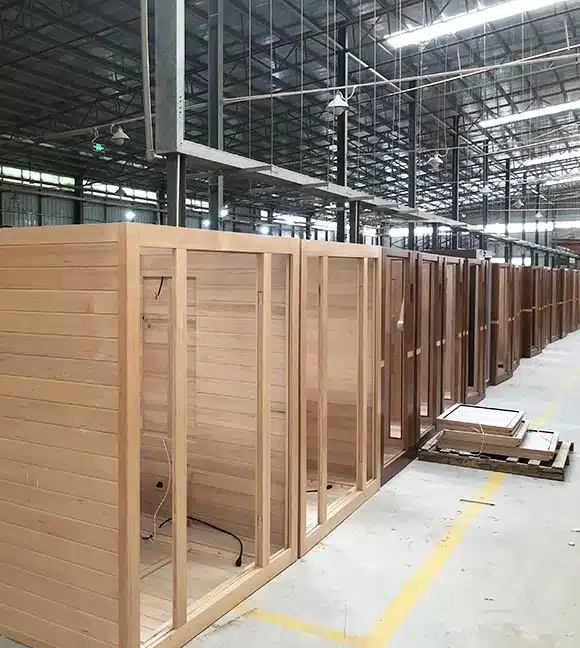
A factory photograph can show a real production environment, but it does not define the materials or inspection outcome of every product. Ask how the selected sauna moves through material preparation, cabin assembly, component installation, inspection and packing.

Use the Bropool factory and quality page for capability context, then request the current product and inspection records relevant to the quotation. Keep company qualification separate from the final commercial scope.
  • Ask which production stages apply to the selected model.
  • Identify the inspection records available for the order.
  • Confirm how nonconforming items and changes are recorded.
  • Link final approval to a drawing, specification or quoted scope.
Sauna cabin frames arranged on a Bropool factory production line
Factory production context for discussing assembly stages and inspection records; it does not identify the specification of every model.

Model and configuration

Separate the Base Model From Requested Changes

Controls, heaters, glazing, lighting, exterior finish, branding, labels and packing can affect price, documentation and lead planning. Record each requested change beside the base model instead of treating an inspiration image as the specification.

For a private-label program, continue through the OEM and private-label workflow. For site-dependent choices, use installation planning before final approval.

  • Name the base model and revision.
  • List mandatory changes separately from preferences.
  • Request feasibility, price and document impact in writing.
  • Approve the final component and finish schedule.
Control interface mounted on a Bropool OS-1200 sauna panel
OS-1200 control-interface detail used to discuss component identity and placement; controls remain model-specific.

From shortlist to order

Qualify the Supplier Before Finalizing the Quotation

Supplier qualification asks whether the organization can support the product and program. The quotation asks what will be supplied for this destination, quantity and site. Keeping those decisions separate makes negotiation clearer.

Before placing an order, reconcile the model record, options, electrical configuration, supplied components, packing, documents, site responsibilities and approval references. Retain the final version so repeat orders do not restart from an old image or message.

Define the market

State destination, buyer channel and intended use.

Choose the route

Select a current format or ask for a shortlist.

Check the supplier

Review product, process and document responses.

Control changes

Record options, branding and site-driven revisions.

Approve the order

Tie price and scope to the final written record.

Buyer questions

Questions to ask when choosing a sauna manufacturer

Use the completed checklist with a real product and market brief.

Should a buyer choose the sauna supplier with the most models?

Not automatically. Range breadth matters only if the supplier can identify current models, explain the differences and support the selected route with consistent records and production controls.

What product information should be available before quotation?

Ask for the current model name, external and usable dimensions, materials, seating, glazing, heat and control route, supplied components, packing form and the items that remain optional.

How can buyers verify factory capability?

Request production context relevant to the product, a clear process description, inspection checkpoints and traceable records. A general factory image should support the conversation, not replace model-specific information.

Are certification marks enough to approve a sauna?

No. Any document or mark must be matched to the selected model, configuration and destination market. Buyers should review scope, issuing body, identifiers and applicable conditions.

How should private-label changes be controlled?

Keep the base model separate from requested branding, finish, component, label, document and packaging changes. Approve the final list and reference it in the quotation and order record.

What should a sauna manufacturer RFQ include?

Include destination, buyer type, use, quantity, preferred format, capacity, site conditions, heat and control preferences, customization, documents, packing and the required decision date.

Project-specific next step

Use the checklist with a real market and product brief.

Send Bropool the destination, intended use, preferred sauna route, quantity, site context, customization and document needs. Ask for current model detailss and a project-specific quotation.

Project enquiry

Tell us what you are sourcing.

Share the company, destination, product direction and decision you need Bropool to review. The team will use the selected page and your message as the starting context.

Preparing the secure form…