Rectangular
Review seating or reclined use, long-side access, heating compartment and available service space.
Sauna, Cold Plunge & Hot Tub Manufacturer · OEM / ODM
Home / Hot Tubs
Hot tub manufacturer · business and project supply
Compare Bropool hot tubs by vessel, exterior, heating system, capacity, installation and maintenance requirements before requesting a quotation.
Choose the hot tub by users, heating method and site requirements. Then confirm the model, drawing, included components, options, documents, packaging and local responsibilities.
Product collection
Showing 1–9 of 9 matching hot tubs
Start with the experience
State the expected users, seating, session frequency, water-care plan, heating preference, delivery access and installation conditions before choosing the shape and finish.
This page provides the broad hot tub buying route. The dedicated subpage covers the narrower wood-heated decision in more depth, while the RFQ confirms the current model and commercial scope.
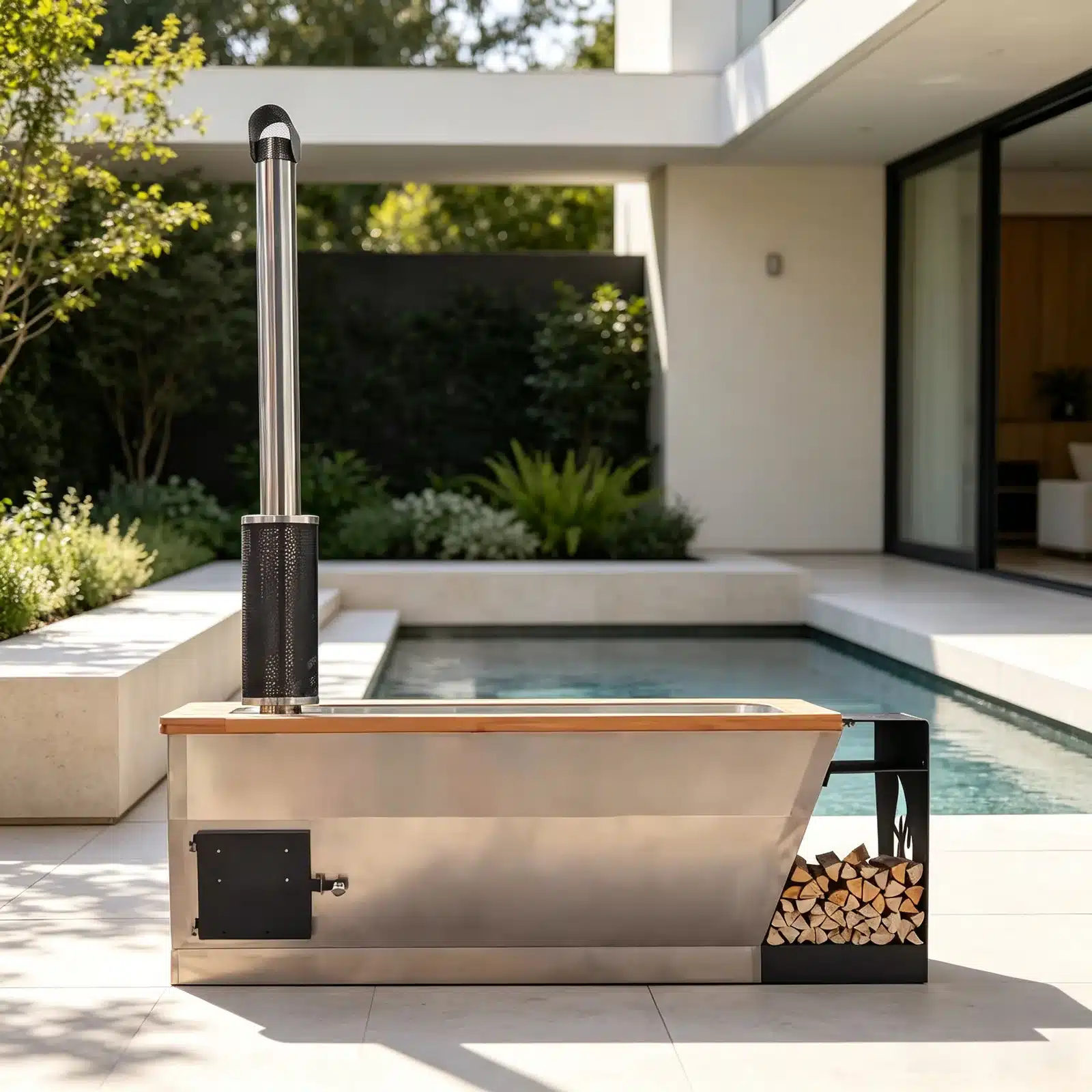
Review seating or reclined use, long-side access, heating compartment and available service space.
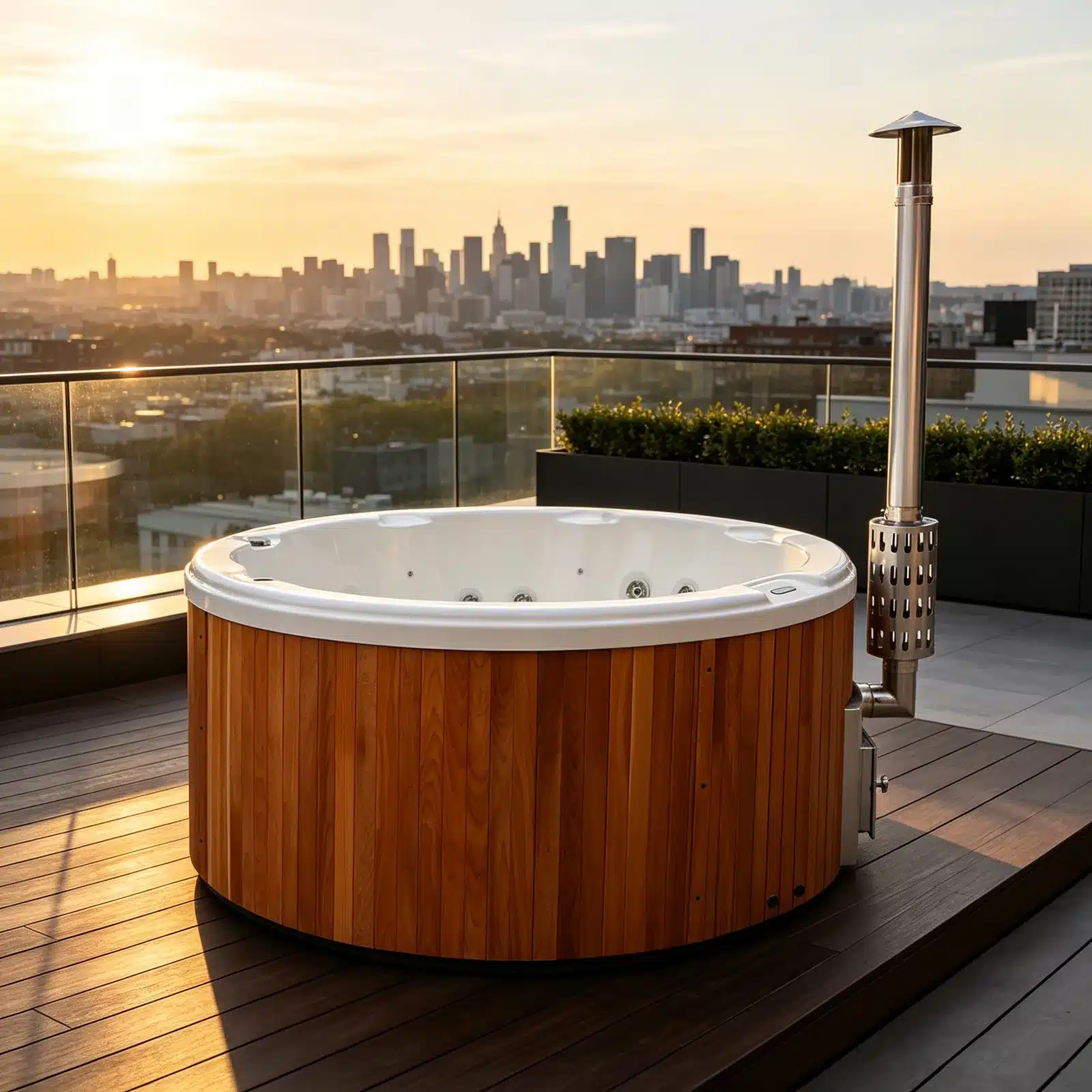
Review shared seating, diameter, entry, cover handling and external equipment position.
Review compact footprint, internal seating, heating arrangement and final model availability.
Compare complete products
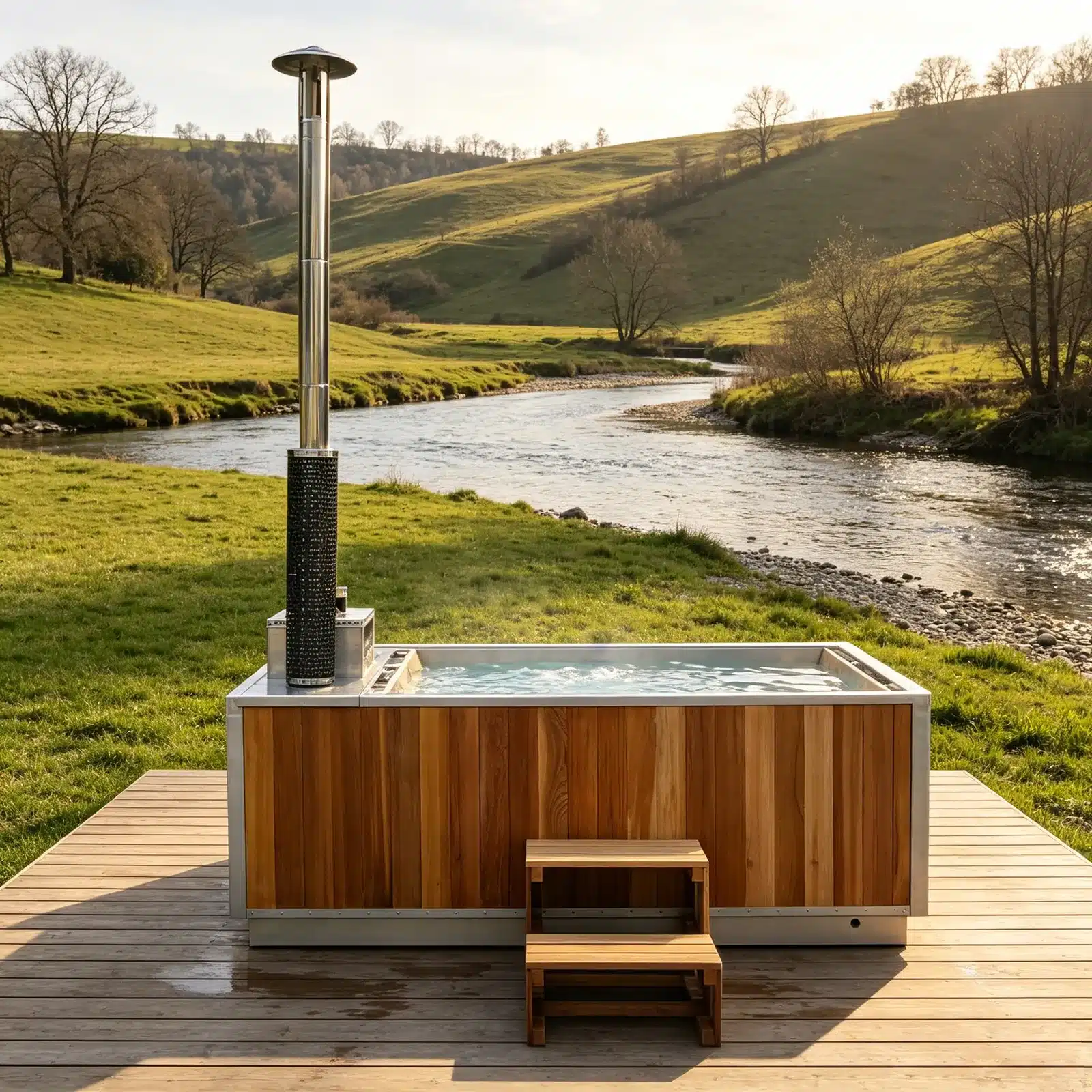
The HT-101 and HT-110 views show different shapes, exterior treatments and equipment relationships. They support early selection without implying that photographed accessories, materials or dimensions apply to every item in the family.
Shortlist by users, internal layout, external footprint, entry and maintenance reach. The next review should align the drawing, vessel construction, heating arrangement, included parts and site requirements.
Vessel, exterior and heat
A hot tub may combine a metal or acrylic water-contact surface with timber cladding, rim, seating or steps. The heating unit may be internal, external or part of another model-specific arrangement. These choices affect usable space, maintenance and site planning.
| Decision | Buyer question | Why it matters |
|---|---|---|
| Water-contact vessel | Which material and finish hold the water? | Cleaning, care, appearance and approved construction |
| Exterior | Which cladding, trim and surface treatment are required? | Weathering, touch points, branding and maintenance |
| Heating | Which method and equipment position fit the site? | Warm-up planning, clearances, access and operating responsibility |
| Entry and cover | How will users enter and staff handle the cover? | Safety, surrounding space and daily operation |
Confirmed brochure references: HT-101 is a compact two-adult wood-fired route. HT-105 uses an internal stove. HT-108 uses an L-shaped seating layout and is presented for up to four users. HT-110 is presented for 1–4 users with a 1100 L capacity; hydro-massage and UV functions are optional. HT-111 uses a built-in vertical wood-burning stove. Confirm every included feature on the selected quotation.


Site planning
Record the access route, base or foundation, drainage, water filling and discharge plan, electrical context where applicable, ventilation, splash management, clearances and local installation responsibilities.
Outdoor exposure adds rain, sun, wind and seasonal conditions. Commercial use adds turnover, cleaning, supervision and handover requirements. These facts should influence the model recommendation before visual options are approved.
Manufacturing approval
Before production, confirm the model, overall dimensions, vessel and exterior materials, heating arrangement, fittings, seating, cover, steps, guards, labels, accessories and packaging. Requested changes should be recorded separately from the base configuration.
Useful inspection points include dimensions, visible finish, connection and drain locations, component identity, assembly, included parts and packing condition. Broader process questions can continue on the factory and quality page.
Range and OEM planning
Distributors should compare buyer use, climate, preferred shape, installation capability and service expectations before choosing a range. Private-label requests should begin with the closest current model and a written change list.
Discuss branding, finish, labels, manuals, accessories and packaging as separate approval items. Structural, material or heating changes may require added review and should not be treated as simple artwork changes.
Choose formats that match local use, outdoor conditions and after-sales capability.
Separate logo, labels, finish, files and packaging from model engineering.
Keep approved drawings, options and pack details aligned for later orders.
Prepare the RFQ
Unknown choices can remain open, but the buyer, destination, use and next decision should be clear enough to support a real shortlist.
Buyer questions
Send the user, site, heating and quantity requirements in one RFQ.
Business buyers can discuss rectangular, round and selected oval routes with different water-contact vessels, exterior treatments and heating arrangements. Availability and final construction are confirmed against the current model.
Start with intended users, seating posture, water volume, external footprint, entry and the operator's turnover plan. Confirm capacity from the current drawing and model record before approval.
Yes. Buyers comparing stove position, flue, fuel, guarding and site responsibilities can continue to the wood-heated hot tub page.
Yes. Branding, selected finish directions, labels, manuals, packaging and feasible options can be reviewed against a base model through the OEM route.
Send destination, buyer type, intended users, preferred shape, footprint, heating method, site, quantity, accessories, requested changes, packaging and document needs.
Project-specific next step
Use the RFQ form to share destination, users, shape, heating preference, site, quantity, customization and required documents. Bropool can then match the request to the appropriate hot tub route.
Project enquiry
Share the company, destination, product direction and decision you need Bropool to review. The team will use the selected page and your message as the starting context.