Vessel and user interface
Record usable size, entry, seating or standing position, edge detail, finish and user access.
Sauna, Cold Plunge & Hot Tub Manufacturer · OEM / ODM
Home / Resources / Buyer Guides / Cold Plunge Specification
Cold plunge specification guide · system and site
Define the vessel, water system, cooling equipment, controls, utilities, service access and expected use before comparing cold plunge models.
Start with the complete system boundary. Then add the destination, intended users, installation setting, maintenance plan and required documents so each supplier quotes the same problem.
Responsible organization: Bropool. Prepared and reviewed by Bropool using named cold-plunge product views and the specification inputs required for a model-based RFQ.
· Contact Bropool for the current record or a project-specific answer.
Define the system
The specification must identify the vessel, water path, cooling equipment, controls, filtration or sanitation system, connections, ventilation, drainage and service responsibilities.
Some products integrate equipment into one enclosure; others use separate components. Neither route is automatically better. The right choice depends on footprint, use pattern, noise and heat rejection, service access, appearance and the site's utility plan.
Record usable size, entry, seating or standing position, edge detail, finish and user access.
Identify circulation, thermal equipment, controls and the operating assumptions to review.
Define electrical, fill, drain, ventilation, service and local installation boundaries.

Specification framework
Use the table as a request structure. It avoids false precision while making every supplier state the product, assumptions and records behind the response.
| Decision group | Buyer input | Supplier response |
|---|---|---|
| Vessel and finish | Form, usable size, entry, finish and placement | Current model, materials, dimensions and options |
| Capacity and use | Expected users, sessions and operating schedule | Applicable product and system route with stated assumptions |
| Water system | Fill, drain, filtration, sanitation and water-care plan | Included components, connection points and maintenance needs |
| Thermal system | Starting condition, target objective, ambient setting and recovery expectation | Selected equipment and bounded operating conditions |
| Electrical | Available supply, connection method and local rules | Rated data and requirements for the quoted configuration |
| Service access | Clearances, ventilation, inspection and removal route | Panel locations, airflow needs and component access |
| Site environment | Indoor or outdoor setting, drainage, condensation and weather exposure | Suitability conditions and unresolved site inputs |
| Documentation | Language, destination, approval and handoff needs | Current model details and files available for review |
Product and equipment route
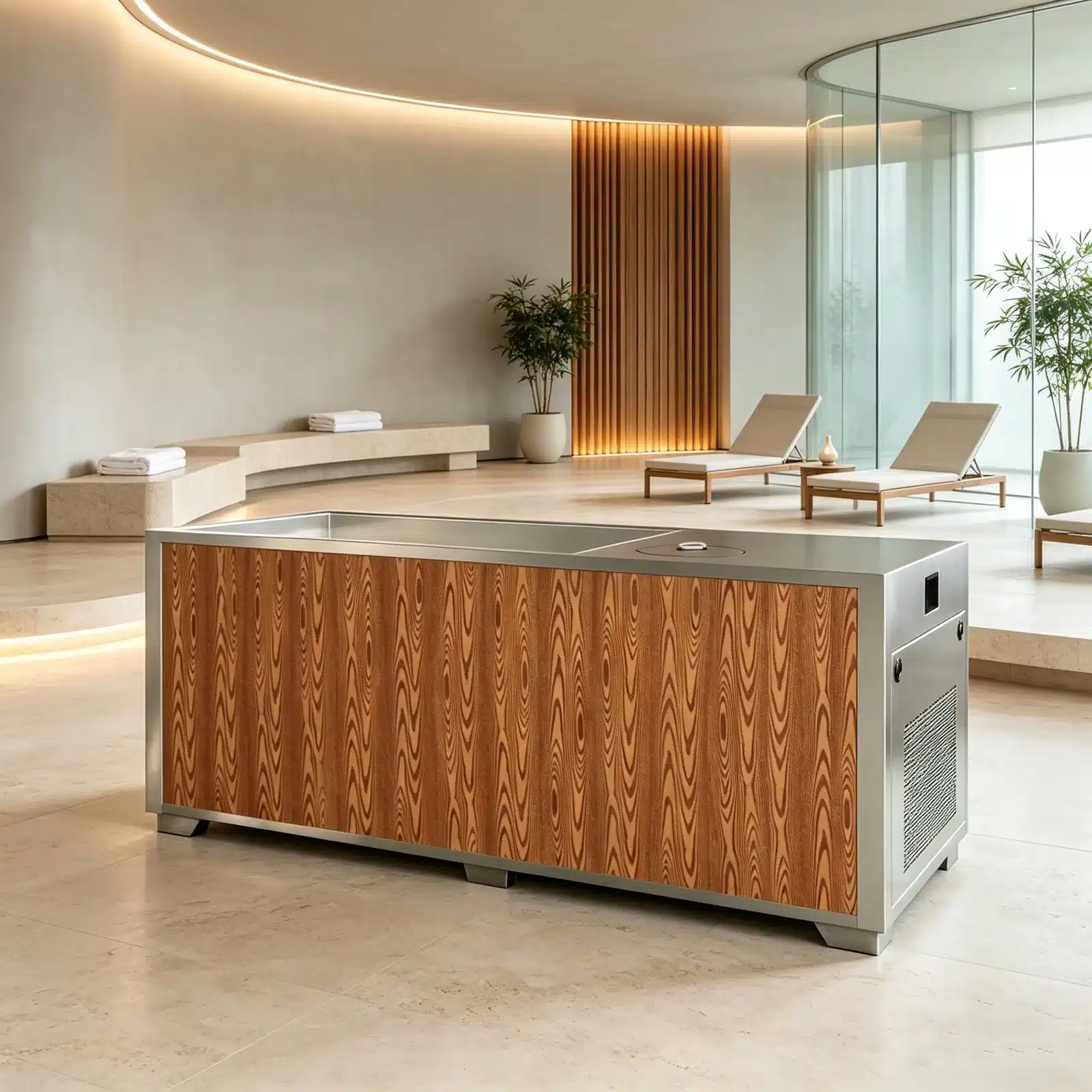
A vessel shown beside separate cooling equipment prompts different access, hose, drainage and layout questions from an integrated unit. Ask the supplier to identify every supplied component and every connection or site item that remains outside the order.
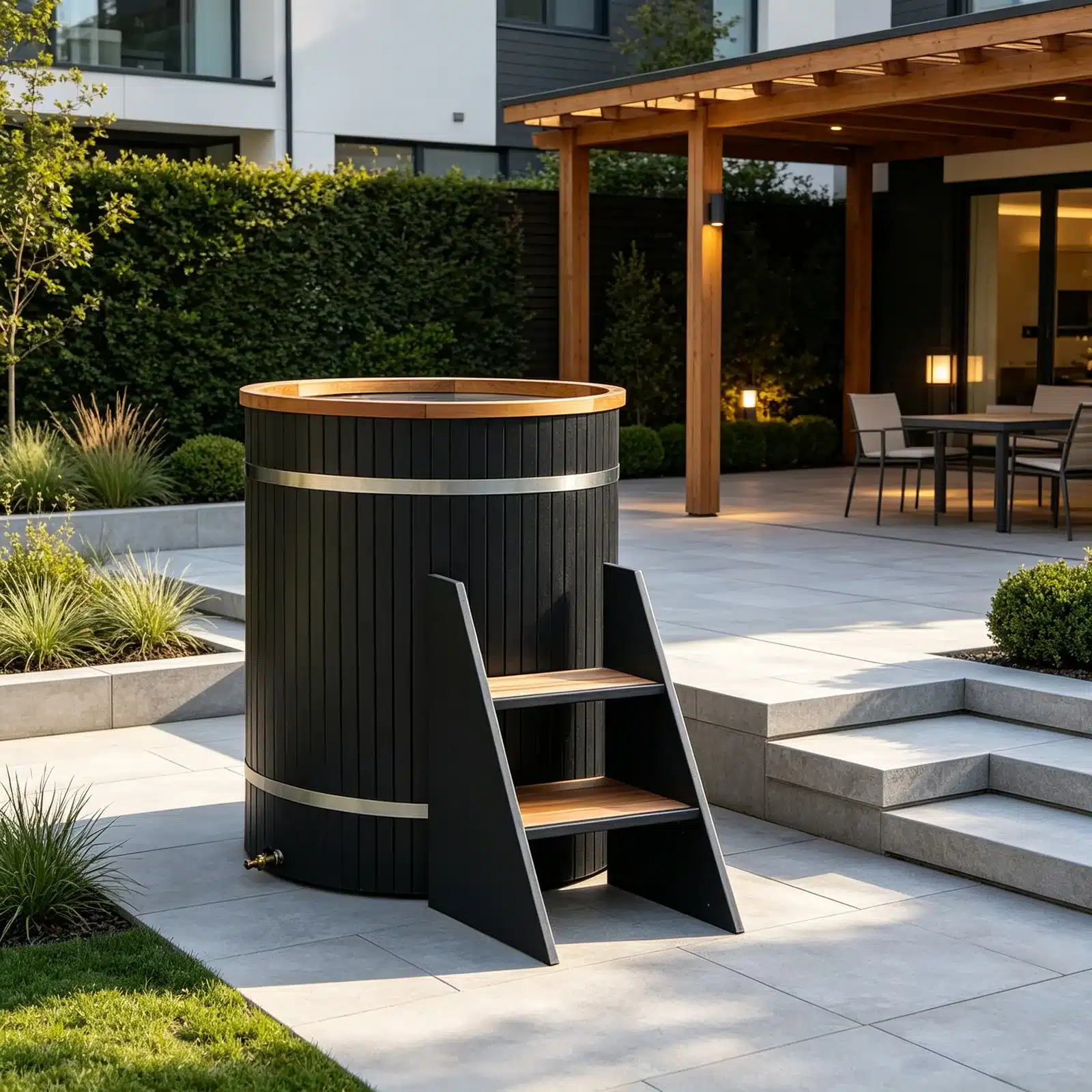
Do not copy a product photograph into the specification as if it defined performance. Use it to discuss form and layout, then request the current drawing, component list and rated information for the selected cold plunge model.
Service and operating access
Airflow, removable panels, filters, drains and control access affect where the system can operate and how quickly it can be serviced. Confirm the required clearances for the exact product rather than hiding the equipment from view too early.
Commercial-use projects should also record the operator, inspection routine, water-care responsibility, cleaning access and escalation path. The commercial cold plunge route helps add those operating inputs.
From preference to RFQ
Start with intended use and site context. Then define the vessel, water path, thermal objective, utilities and service route. Ask the supplier to state assumptions and unresolved items instead of forcing an unsupported number into the brief.
Before approval, reconcile the quotation with the current model information, supplied-component list, site responsibilities and required documents. Keep that record with the project for installation and after-sales handoff.
State users, schedule, supervision and operating context.
Record form, entry, usable size, finish and placement.
Identify water, thermal, control and sanitation routes.
Add access, utilities, drainage, ventilation and service.
Match the quote to model data and responsibility scope.
Buyer questions
Send the vessel, cooling, utility and service requirements in one RFQ.
No. Bropool treats thermal, filtration and sanitation equipment as part of the selected cold plunge system. The vessel, equipment and site must be reviewed together.
No. A meaningful review needs the exact product and equipment configuration, water volume, starting and target conditions, ambient environment, use pattern and site assumptions.
Define the intended use, water-change approach, filtration or sanitation expectation, local operating requirements and who maintains the system. Final components must be confirmed for the selected configuration.
Equipment needs clear ventilation, inspection and maintenance access. A visually suitable location may still be unsuitable if panels, filters, drains or connections cannot be reached.
Confirm the selected equipment, rated voltage and frequency, connection method, circuit requirements and local responsibility using current model documentation and qualified local review.
Include destination, use, user volume, vessel route, water-system expectations, temperature objective, ambient conditions, utilities, drainage, access, service space, finish, quantity and required documents.
Project-specific next step
Use the RFQ to state destination, intended use, quantity, site conditions, vessel route, water and thermal expectations, utilities, service access and required documents.
Project enquiry
Share the company, destination, product direction and decision you need Bropool to review. The team will use the selected page and your message as the starting context.