
Choose a traditional sauna when a heater-and-stones experience is central to the brief. Choose an infrared sauna when the requirement is an emitter-based cabin with a defined seating and panel layout. Consider a hybrid sauna when buyers genuinely need both systems in one cabin and the supplier can document how each mode works. In a traditional vs infrared vs hybrid sauna comparison, the useful question is which configuration meets the intended use—not which label sounds more advanced.
For distributors and private-label brands, this choice affects the product explanation, site requirements and after-sales information supplied to customers. Start with the heating experience, then verify the cabin and controls. Wood species, exterior shape and lighting colour do not establish the heating system.
Scope: This is a procurement comparison, not a health-benefit ranking or an installation manual. Current Bropool sauna catalog models are presented for personal and household use. A gym, spa, hotel or other high-frequency shared setting needs a separately confirmed model and written project review. Temperatures, warm-up times, electrical ratings and permitted operating modes remain model-specific.

Traditional vs infrared vs hybrid sauna: compare the routes
The Bropool sauna range separates placement, cabin form and heating system. Keep those decisions separate in a comparison: an outdoor cabin is not a fourth heating technology, and a barrel shape does not tell you which heater is supplied.
| Decision | Traditional | Infrared | Hybrid |
|---|---|---|---|
| System to identify | Sauna heater, stones, controller and cabin arrangement. | Emitter type, panel or radiator locations, controls and seating positions. | Both heating systems, plus the permitted relationship between their controls. |
| Reason to shortlist | The buyer wants a heater-and-stones sauna experience. | The buyer wants an infrared-emitter experience in the approved cabin layout. | The buyer wants access to both experiences and will use both. |
| Layout question | How do benches, heater position, guards and ventilation fit together? | Which emitters serve each seating position, and what spacing does the manual require? | Can both systems fit without compromising seating, guards, required spacing or service access? |
| Control question | What operating limits and functions apply to the quoted heater and controller? | Which emitters or zones are controlled, and how are the settings used? | Are modes separate, switchable or explicitly approved for simultaneous use? |
| Evidence needed | Matched cabin, heater and installation records. | Matched emitter layout, electrical data and operating instructions. | A complete system record covering each allowed mode—not two unrelated component brochures. |
On a small screen, scroll within the table to compare every route.
These are selection questions, not universal specifications. Harvia’s official infrared overview describes both dedicated infrared cabins and cabins combining infrared with traditional sauna equipment. That distinction helps define the choices; it does not establish the components, performance or approvals of any Bropool model.
Match the experience to the seating and cabin layout
Traditional: specify the heater experience first
If water-on-stones use is part of the requirement, put it in the brief and confirm the permitted procedure in the exact heater and cabin instructions. Do not infer it from a bucket in a photograph. The heater choice also needs to be reviewed with the cabin layout, glazing, ventilation and destination requirements.
Bropool’s IS-1402 product record identifies a traditional indoor sauna route. Red lighting shown in a cabin does not turn that route into infrared heating. Ask for the named heater package and controls rather than classifying the product by the colour of its interior.
Infrared: compare the actual seating positions
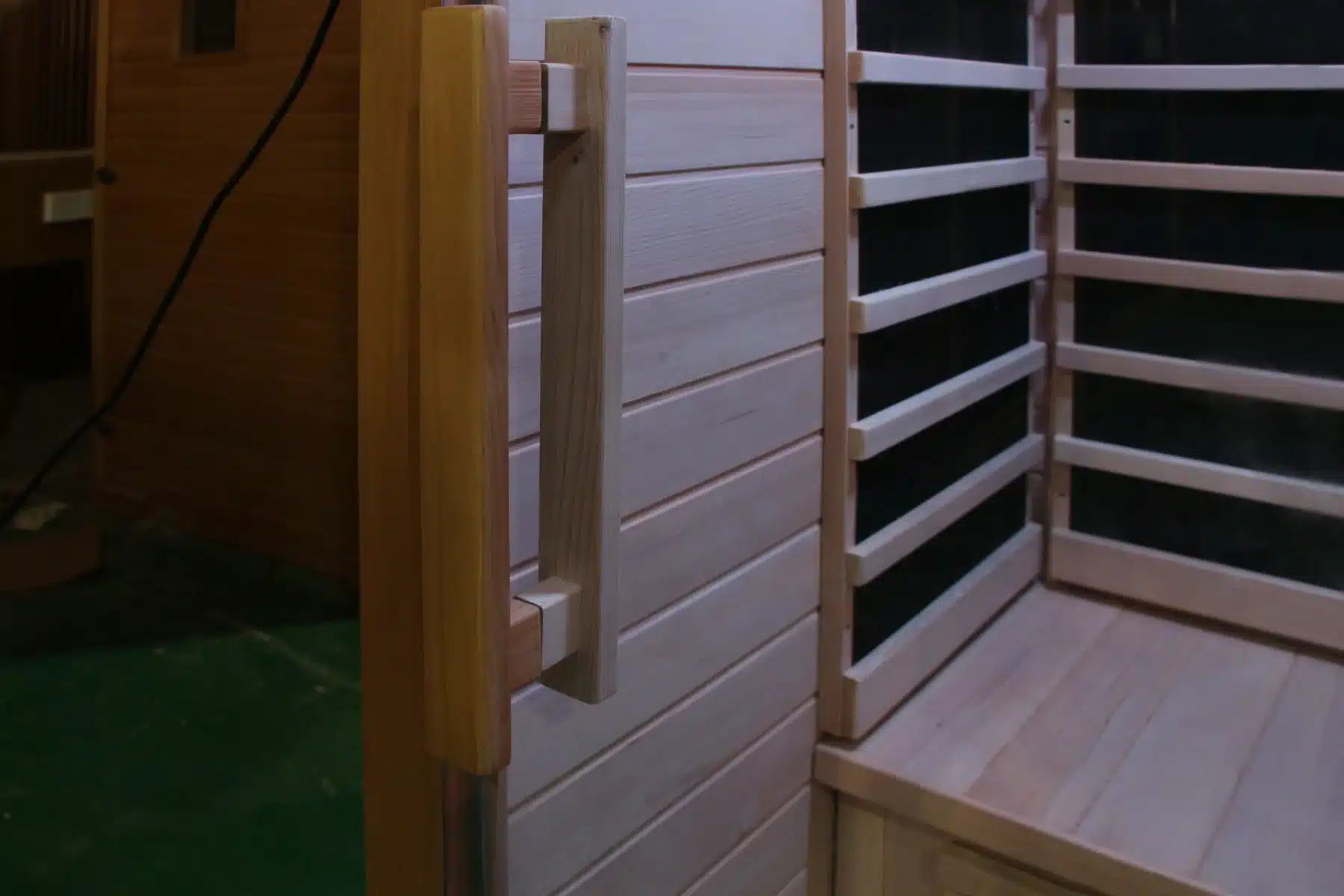
For an infrared shortlist, request a drawing or clearly labelled interior views showing the emitters relative to each seat. Compare panel placement, guarded areas, controls and the spacing required by the model’s instructions. A total power figure alone does not describe that arrangement.
The IS-1101 infrared sauna series is a current Bropool reference. Its product record states that heating plates, controls, lighting and seating vary with the selected model. Keep the exact size and component version attached to the comparison; do not copy an emitter layout from one family member to another.
Ask what the hybrid configuration actually permits
A hybrid configuration can be useful when the customer wants both experiences but has space for one cabin. Its value depends on the modes the customer will use and the documented system design. It is not automatically the right choice for a buyer who wants only one heating route.
Harvia’s hybrid sauna explanation describes a traditional electric-heater sauna with infrared panels that can be controlled separately. Treat that as an example of a defined arrangement, not proof that every hybrid sauna allows both systems to run together. It is also not an instruction to retrofit an unapproved cabin.
Bropool lists the IS-1503 as a hybrid sauna. The current public record does not settle every control-mode or simultaneous-operation question. Request those answers for the quoted configuration before promising them to an end customer.
| Proposed mode | Ask the supplier to identify | Approval basis |
|---|---|---|
| Traditional system only | Active heater, controller, sensor arrangement and what happens to the infrared system. | The complete cabin’s instructions and component records for this mode. |
| Infrared system only | Active emitters or zones, controls and any conditions for switching from a heated cabin. | The permitted settings and switching procedure for the quoted combination. |
| Both systems together | Whether this is permitted at all; if so, the control logic, total electrical requirements and operating limits. | Explicit documentation for the combined mode. If it is not documented, leave it unapproved. |
Add the cabin model, heater and emitter identifiers, controller version, destination and document revision to the record. Ask how faults are handled and whether one system may be used when the other is unavailable. Do not assume either answer. This is a buyer’s approval worksheet, not a claim that Bropool has already tested or approved every listed mode.
Compare electrical demand and operating evidence fairly
Do not rank energy use from the words traditional, infrared or hybrid. A rated power value describes equipment input under its stated rating conditions; it is not a measured cost per session. Warm-up, control cycling, session length, cabin construction and operating conditions affect what the comparison needs to record.
- Name the configuration: cabin, heater or emitters, controls and the operating mode used.
- Define the starting point: starting cabin and ambient conditions, door state, ventilation arrangement and relevant setup details.
- Define the comparison period: state whether it includes warm-up, the occupied session and any post-session operation.
- Record the outcome and input separately: measurement positions, temperature readings, elapsed time and metered electrical energy in kWh.
- Disclose differences: a different cabin, operating mode or test endpoint is not a like-for-like result.
For a simple electricity-cost estimate, multiply measured kWh for the defined period by the applicable price per kWh. State which equipment the meter covers and any tariff charges excluded. Without matched measurements, leave the operating-cost comparison unresolved rather than substituting a marketing temperature or nominal heater rating.
Ask the responsible qualified local professional to review the model-specific electrical and installation information against the site. A plug or circuit requirement for one market must not be carried over to another model. Use Bropool’s installation-planning page to organize the site-side questions and responsibilities.
Turn the choice into a model-specific brief
Keep the shortlist short enough to compare properly. For each candidate, write down the experience required, intended users, indoor or outdoor placement, seating needs and available site supply. For a hybrid candidate, attach the mode record above. Mark unanswered fields as open rather than treating a product name as an approval.
Then use the Sauna Specification Guide for the wider RFQ and the Sauna Quotation Checklist to compare included and excluded components. Those are separate decisions: first select an appropriate heat-system configuration, then reconcile the commercial scope.
Send Bropool the destination market, intended use, preferred heating route, capacity, site constraints and required documents. If both traditional and infrared operation matter, state whether separate sessions or simultaneous use is being requested so the team can confirm what the current model supports.
Request a model-specific sauna comparison
Prepared by Bropool. Product records and external sources reviewed on 5 October 2026. This comparison and its worksheets are editorial procurement guidance, not product test results or a substitute for the selected model’s instructions.