
Cold plunge drainage planning means identifying how water will be collected, where it may go and who is responsible before the tub is ordered. Start with the selected product’s documented outlet and operating instructions, then ask the site team to review the route and receiving point. A drain fitting in a photograph is not a complete drainage plan.
For distributors, private-label buyers and installation coordinators, the useful result is a short interface record: the tub and equipment configuration, each expected water event, the proposed route, the site-side work and the person who will resolve open questions.
Scope: This is a buying and site-coordination checklist, not a plumbing design, water-treatment procedure or discharge approval. It states no Bropool drain size, flow rate, capacity, connection standard or test result. The appropriate arrangement depends on the selected equipment, site, water and local requirements.
Start cold plunge drainage planning with the water events
Do not treat every wet-area question as the same event. Planned emptying, water splashed during use, cleaning, condensation and service work can occur at different points. Ask the operator and site designer which events matter for the proposed installation and what each one needs. Do not assume that a single visible outlet handles all of them.
For a model-specific document example, the user manual supplied for CT-13 warns that water may spill when a user enters or exits the tub and calls for adequate drainage and a non-slip surface. That reminder concerns water around the tub; it does not, by itself, specify an outlet size, a discharge capacity or an approved receiving route.
Source and scope: Cold Plunge Tubs – User Manual, supplied for CT-13, file ct-13-user-manual.pdf, “User responsibility advice”, PDF sheet 4 of 9 (spread labelled P6). No issue date or revision is printed in the reviewed copy; the relevant original page was checked on 5 November 2026. This is CT-13 document guidance, not a test result, and must not be applied to CT-07 or another model without that model’s own documentation.
| Event | Question to answer | Information to retain |
|---|---|---|
| Planned emptying | Where does the product documentation identify the drain, and where is water intended to go? | Selected configuration, applicable instructions and proposed receiving point. |
| Splash and cleaning | Where could water reach the surrounding floor, base or nearby equipment? | Site observations and the responsible professional’s containment or drainage review. |
| Condensation | Which surfaces or connections need observation in the proposed location? | Observed conditions and the separate response for the site and equipment. |
| Service or disconnection | Which parts may contain water when service is required, and who follows the applicable instructions? | Equipment documents, access route and assigned service responsibility. |
| Unexpected water | Who responds if water appears outside the planned route? | Contact, isolation and escalation arrangements reviewed by responsible parties. |
This worksheet is an editorial coordination tool; it does not claim that every event occurs on every Bropool model. Use the condensation site review for that separate observation task.
Identify the selected product’s drain interface
Start with the exact tub, cooling equipment and any other separately supplied components. Ask for an identified drawing or instructions showing the drain location, connection details and relevant service points. Keep proposed parts marked as proposed until the supplier confirms them for the order.
The cold plunge product range is the starting point for the product route. The CT-07 product page identifies one model for an enquiry; its photograph does not establish a connection size or approve a site arrangement.
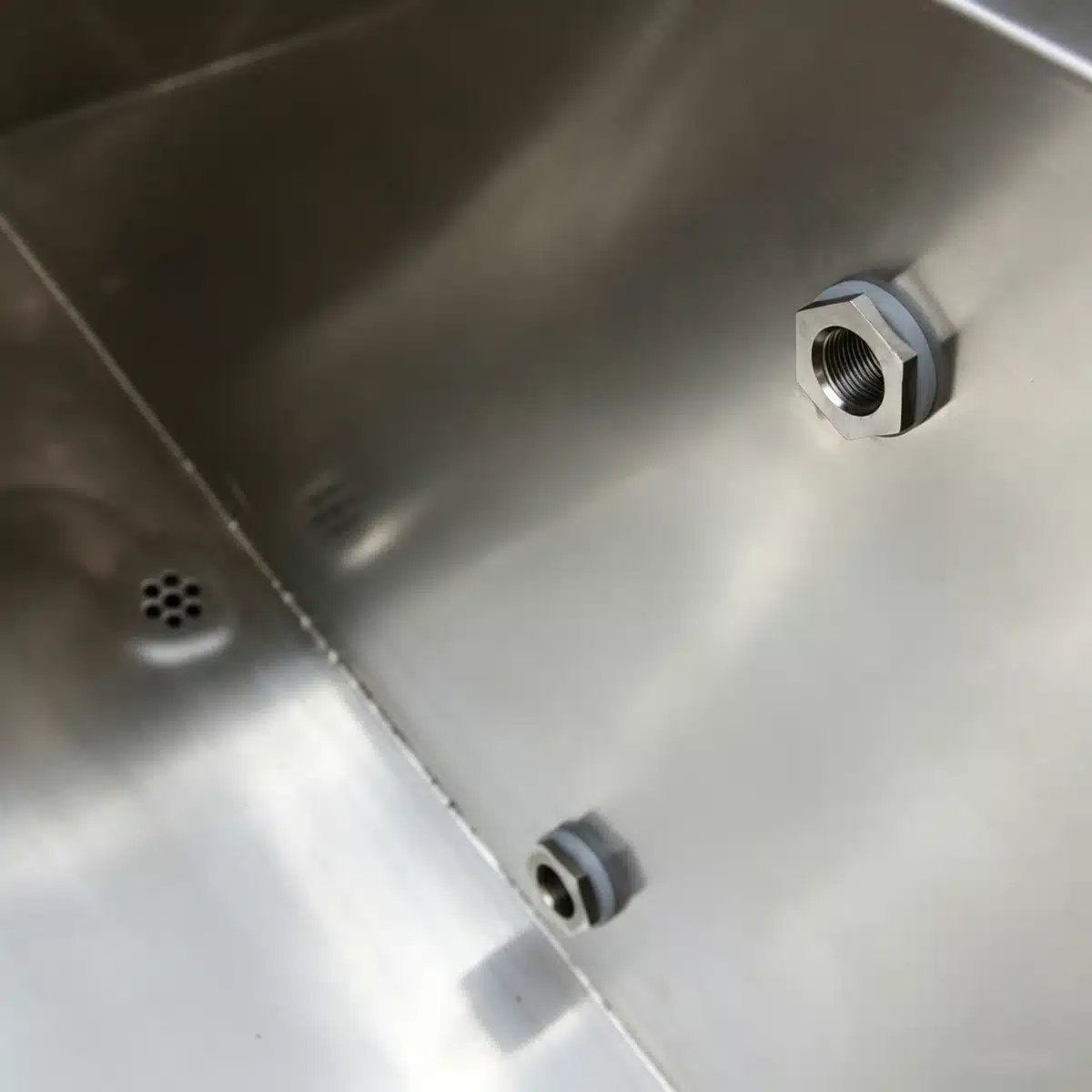
In its own setup and maintenance guidance, Ice Cap distinguishes filling and draining connections for its product. This is an example of why connection functions should be identified, not evidence that a Bropool tub has the same arrangement. Use the selected product’s own instructions.
The chiller connection checklist addresses the matching of hose ends, fittings and seals. Keep that connection review separate from the site decision about where water is collected and discharged.
Review collection, routing and the receiving point
Mark the proposed path from the documented product interface to the receiving point on a site sketch. Show changes in level, doors or walkways crossed, nearby electrical equipment, areas vulnerable to water and the place where a hose or connection would be handled. A sketch helps identify questions; it does not establish that the route is permitted or technically adequate.
Ask the responsible local professional to review the receiving arrangement, site protection and applicable requirements for the water and location. Do not assume a floor opening, garden area or external drain is an acceptable receiving point. Water-care products, cleaning agents and site conditions should be identified so the reviewer can make the appropriate determination.
Check that the proposed route can be reached for routine operation and service without blocking access to other equipment. If a pump or additional fitting is proposed, identify who specifies and supplies it and which instructions govern the complete arrangement. This article does not prescribe a pump, slope, pipe size or discharge rate.
Use the broader installation-planning page to coordinate access, base, utilities and site responsibilities alongside this narrower drainage review.
Assign every interface before approving the quotation
A quotation can name the tub and still leave the drain route unresolved. Put product-supplied items and site-side work in separate fields. If a component, drawing or local decision is not yet confirmed, keep it open rather than treating it as included.
| Party or record | Question | Evidence to keep |
|---|---|---|
| Equipment supplier | Which drain interface, instructions and included parts apply to this configuration? | Named product version, current documents and included/excluded list. |
| Site professional | Who reviews collection, site protection and the proposed receiving route? | Site sketch, review decision and remaining conditions. |
| Operator | Who handles planned water changes, cleaning and unexpected water? | Operating responsibility and access to the relevant instructions. |
| Installer | Who provides and connects each separately agreed part? | Handover boundary and any itemized local work. |
| Buyer | What changes must reopen the review? | Tracked model, site, water-care and layout changes with a named owner. |
The cold plunge specification guide keeps the larger equipment brief together. If the model, chiller arrangement, site or water-care plan changes, ask which parts of the drainage review must be repeated.
Keep the approved record with the equipment
Before handover, reconcile the supplied parts and instructions against the agreed schedule. Keep the site sketch, open-item resolutions, responsible contacts and the applicable product documents together. A completed delivery checklist does not replace site review or commissioning by the responsible parties.
For private-label programs, carry the drainage questions into the OEM configuration review. A different enclosure or location can affect the interface even when the product family name stays the same.
Send a model-specific enquiry with the destination, proposed location, product configuration, site sketch and unanswered drainage questions. Ask which product documents and components are available for review before finalizing the order.
Prepared by Bropool. The CT-13 drainage-related manual passage, public product-reference routes and official manufacturer source were reviewed on 5 November 2026. The worksheets are editorial buying tools, not Bropool test results, universal installation instructions or site discharge approval.