
Cold plunge condensation becomes possible when an exposed surface is colder than the dew point of the air around it. For a buyer, the useful question is therefore not just “Does this tub sweat?” Ask which surfaces were checked, how cold they were, what the room conditions were and where any water went. A dry showroom photograph cannot answer those questions for a humid installation.
For a hotel, gym or distributor, a useful review connects the proposed equipment to the actual room and a written acceptance record. It also keeps condensation separate from a leaking connection, splash or cleaning water. More than one source can be present.
Scope: This guide explains what to request and record before approval. It is not a Bropool condensation test report, a leak diagnosis or an instruction to modify equipment. The Bropool records reviewed on 13 October 2026 do not establish a universal humidity limit or a condensation-free rating. Use the Cold Plunge Buyer Specification Guide for the complete equipment brief.

Cold plunge condensation starts with the surface and the air
The US National Weather Service explains dew point as the temperature at which air, cooled at constant pressure, reaches saturation. Relative humidity depends on temperature, so a humidity percentage on its own is an incomplete description of the room.
Record room-air temperature and relative humidity together, or use a suitable instrument that also reports dew point. Then compare that dew point with the temperature of the specific surface being reviewed. The water setting on a controller is not a measurement of the outer cabinet, a hose connection or the floor beneath the unit.
Illustrative readings, not product data: suppose the measured room dew point is 16°C. An exposed surface measured at 10°C is below that point, so condensation is possible there. A different surface measured at 18°C is above it at that moment. Neither reading proves that the whole installation stays dry, and neither identifies the source of an existing puddle. Small differences also need to be considered against instrument accuracy and changing conditions.
Choose measurement locations with the responsible technician and use instruments suitable for those surfaces. Do not open equipment or approach electrical parts to obtain a reading. If a location cannot be checked safely, record it as unobserved.
Record where water appears before naming the cause
A wet floor is an observation, not a diagnosis. Note the first visible wet point, the time and what was happening. A photograph of water only at its final collection point can miss its origin. The following table organizes a report; it does not authorize a repair or a return to service.
| Visible condition | Record for review | Limit of the observation |
|---|---|---|
| Droplets across an exposed cold surface | Exact area, surface temperature, room dew point and time. | Compatible with condensation under suitable conditions; it does not rule out another water source. |
| Water concentrated around a fitting | Safe close-up and wider view, timing and whether nearby surfaces are wet. | A fitting location alone does not distinguish a leak from condensation or water tracking from elsewhere. |
| Wetness after entry, exit or cleaning | Activity, wet footprint and condition before the activity. | Timing helps the review but does not prove that every wet area came from splash or cleaning. |
| Water beneath a closed enclosure | Accessible exterior views and the observed collection area. | The source remains unknown without an appropriate qualified inspection. Do not remove panels to investigate. |
If water creates a slip hazard, reaches electrical areas, or accompanies a significant leak or another unsafe condition, stop use and restrict access under the site’s procedures. Do not keep operating the unit to produce a better video. The Bropool care and escalation guide explains the boundary between routine observation and qualified service.
Ask what is insulated, not just whether the tub is insulated
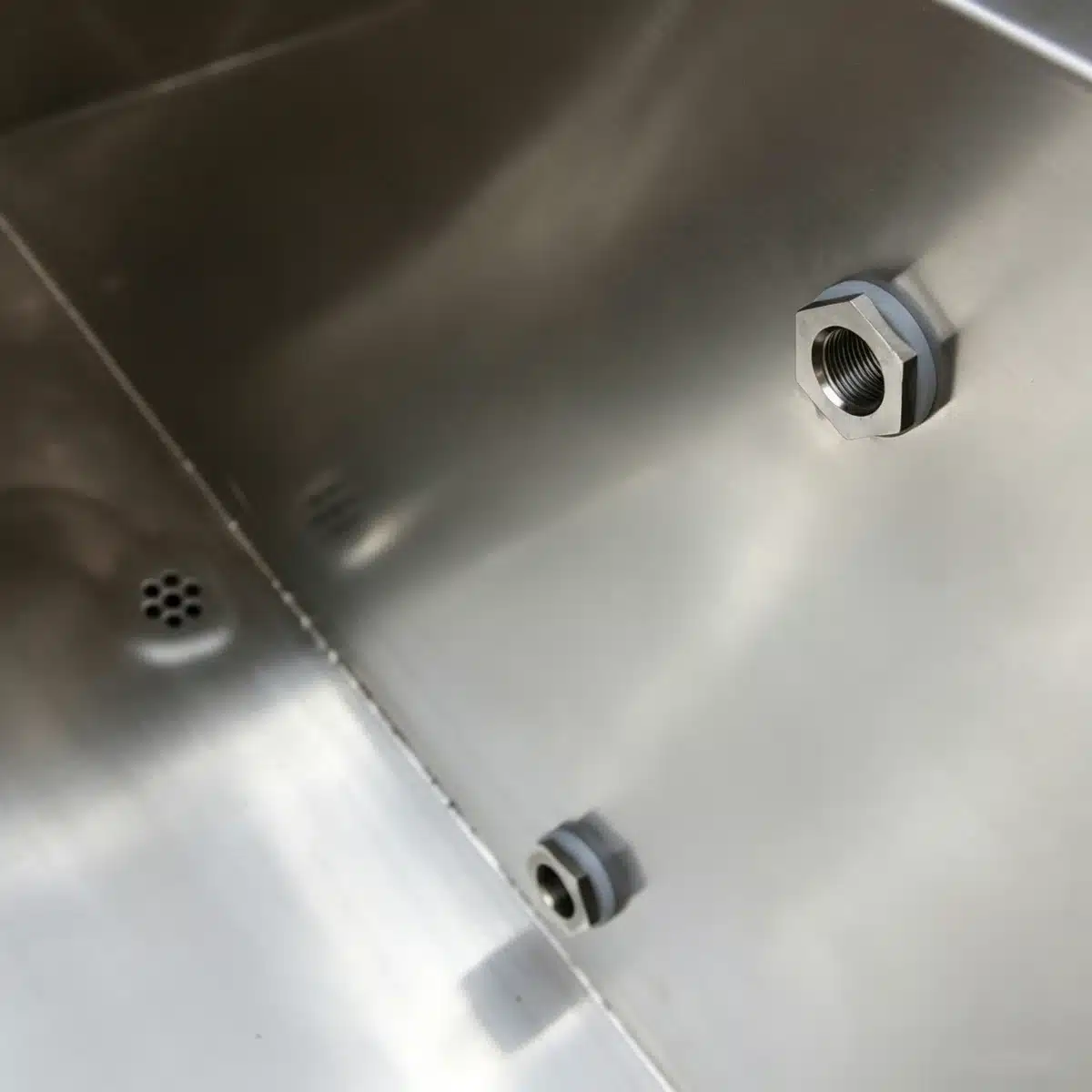
“Insulated” needs a boundary. Does the proposed construction cover the vessel, accessible cold-water lines, fittings and the relevant interfaces? Which parts are factory supplied, and which belong to the site installation? Ask for a drawing or written description tied to the quoted configuration. Cladding and cabinet photographs cannot establish the hidden construction.
The US EPA’s building moisture-control guidance identifies cold-water pipes and fittings as condensation-control points and calls for appropriate, continuous insulation without gaps or unsealed seams. The source is written for school-building design, not cold plunge certification. Its insulation principle helps frame questions for a qualified designer; it does not verify the construction of any Bropool model.
Use that principle to ask the supplier and local designer how the specified insulation system addresses the intended room conditions, joints, terminations and maintenance access. Do not select a universal foam thickness from this article or add an improvised wrap to a finished product. Any change needs approval for the actual equipment and its operating instructions.
Keep cold-side insulation separate from equipment ventilation
The Bropool cold plunge range includes different equipment arrangements. The cooling-system comparison explains why an external chiller, integrated enclosure and direct-cooling route need different layout questions. Do not assume that a metal outer panel is at the water temperature, or that a ventilated equipment cover is an insulated water vessel.
Keep required air openings and service access clear. Covering a louvered cabinet to contain moisture is not a substitute for identifying the source and reviewing the design.
Build a site record that can explain changing conditions
A brief demonstration in one room establishes only what was observed there. Record the proposed operating environment before relying on it elsewhere. Include conditions during ordinary operation and credible humid periods, not only a quiet, air-conditioned showroom visit.
| Record group | Include | Keep explicit |
|---|---|---|
| Equipment | Model, sample identifier, configuration revision, supplied connections and cover. | Any difference between the observed sample and the proposed order. |
| Room conditions | Air temperature, relative humidity, dew point, time and sensor position. | Instrument identity, accuracy and whether the conditions represent the intended site. |
| Operating state | Actual water reading, controller setting, cooling state and cover position. | User activity, cleaning, nearby showers and door or HVAC changes during observation. |
| Surface and water evidence | Marked locations, suitable surface readings, timed photographs and wet areas. | Unobserved areas and any uncertainty about the water source. |
| Site response | Floor protection, drainage, inspection access and the person responsible for each item. | Open product questions versus building-side work requiring qualified local review. |
A facilities professional should review room moisture control and drainage alongside the equipment information. This article does not size a dehumidifier or prescribe one humidity target for every project. Coordinate those decisions through the wider installation-planning process. A collection tray, if approved, manages collected water; it does not by itself establish or remove its cause.
Agree what a demonstration must establish
Replace a vague request for “no sweating” with a review plan both parties understand. Identify the configuration, room-condition range, operating state, observation period, surfaces to be checked, documentation and response to an unresolved result. These are proposed purchasing questions, not a standard Bropool test package or a promise that a particular result will be achieved.
- Set the conditions first. Agree which intended-use conditions the review represents and which remain outside its scope.
- Define the observation. Name the accessible surfaces and areas to inspect, the instruments and the people responsible. Follow the current model instructions for any permitted operation.
- Write the acceptance criterion. State how visible moisture, collection, floor wetness and unresolved sources will be assessed. Keep product acceptance separate from the local team’s site-safety approval.
- Close the gaps. If a condition was not observed or a water source remains uncertain, record an open question, its owner and the evidence needed next. Do not turn “not checked” into “passed.”
A distributor should retain these limits when writing a product listing. A dry result under recorded conditions does not support an unrestricted “condensation-free” claim. A project buyer should carry the accepted configuration, room assumptions and responsibilities into handover.
For a Bropool quotation review, send the model under consideration, destination, indoor or outdoor setting, available room readings, proposed water conditions and the specific moisture question through Request a Quote. Keep unknown values marked as unknown so product and site questions can be resolved against the same brief.